Showing posts with label Reviews. Show all posts

Monday, November 19, 2012

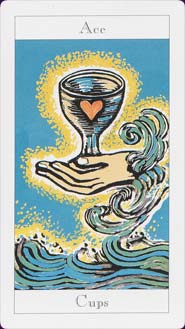
Review: The Tarot Nova


Statistics.
What: The Tarot Nova.
Who: Dennis Fairchild and Julie Paschkis
Price: Retails between $5 and $20.
Size: Deck is a smallish, but standard, square-ish size.
Where: I purchased my deck at Barnes and Noble as a kit, here is an Amazon.com link.
Rating: ●●

Upsides: The deck is a smaller, but standard, size. It's incredibly easy to handle and read. The quality is very high and the artwork, while simplistic, is not completely beyond comprehension.

Downsides: The complete Fortune Telling Kit is not without it's shortcomings, due to it's "novelty gift" nature.

Style: This is a standard "tarot deck" in the Waite/Smith Style. The entire deck is done in a marker-art technique of brightly colored, simplistic, scenes and characters on a black background. The back image is a similarly styled floral and celestial motif.The cards are titled outside of the image and there is a generous border all the way around.

The suits, and the Majors, all have colored corners Majors (Purple) are Cups (Blue), Swords (Yellow), Pentacles (Green) and Wands (Red). All cards are pipped with small, complimentary, scenes

Tricks and Treats: It's a pretty standard deck, but one that's appropriate even for children - either to learn to read on, or to be read for with. It is more inclined to respond like a friend would - "He's greedy" rather than "This gentleman may not, perhaps, be the best to get in bed with financially. Winkwinknudgenudge."

Verdict: This is a little, handy, simplistic, non-scary deck that reads very well.

Rating: ●●

Monday, November 5, 2012

Review: The Dee/Baker Tarot


Statistics.
What: The Jonathan Dee Tarot Pack
Who: Jonathan Dee and Shirley Barker.
Price: Retails between $0.01 and $20.
Size: Deck is a standard size, cards are thin and matte finished.
Where: I purchased my deck at Barnes and Noble as a kit, here is an Amazon.com link and one for the Book.
Rating: ●●○○

Upsides: The deck is a standard size, the cards are fairly sturdy resilient. They are packaged with a thin, hardcovered, book with various meanings and spreads. The layout is clean and simple, easily readable.

Downsides: Tuck boxes are not meant for the long-haul and this one practically disintegrated. The thinness of the cards means they bend very easily - though I think a well-worn deck is a sign of practice. The book is fairly pointless, and at one time it was wrapped in black paper and used as a shelf (on top of candle holders) on my altar. ;)

Style: This is a standard "tarot deck" in the Waite/Smith Style. The entire style of the deck appears to be a pallette knife-work painting. The back image is er... swords, or reeds or stalks on a block-printed-looking background. Faces are the same pallette knife styled art on a flat background of a bright color, depending upon the suit. The cards are titled outside of the image and there is a generous border all the way around.

The suits are Cups (White/Yellow/Blue), Swords (Red/Yellow/Purple), Pentacles (Orange/Green/Yellow) and Wands (White/Red/Orange). Minors are pipped on the number cards, with additions ranging from tiny portraits to pictoral scenes alongside them.

Tricks and Treats: It's a pretty standard deck.

Verdict: This deck has never read for me worth a damn, so I can't really deliver much of a verdict there. It's very, very, very inexpensive. The art style also annoys me.

Rating: ●●○○

Monday, October 29, 2012

Review: The Hertz Vampire Tarot

Statistics.
What: The Vampire Tarot Deck w/Mini Book.
Who: Written and Illustrated by Nathalie Hertz.
Price: Retails between $5 (sale prices) and $20.
Size: Deck is slimmer, 2.5x5", round-cornered, and "Plasticoat" glossy.
Where: I purchased my deck at Borders, here is an Amazon.com link.
Rating: ●●○○

Upsides: The deck is packaged in an attractive, semi-durable tuckbox with a small mini-book (stapled, not a folded sheet). The book is 35 pages, which is large for a deck-book. It is black and white. The layout is clean and simple, easily readable. The cards are nicely-sized for smallish hands and durable, which is nice, and the plasti-coat finish is slightly textured which helps with dealing and shuffling. 

Downsides: Tuck boxes are not meant for the long-haul and I assume this one will go the way of others in time... that is to say floppy, falling apart, missing the tuck-tabs...etc. The book is small, concise, and to the point. Almost too short, seeing as it's a deck-book. There are no frills and the spreads are minimal and standard. I really would like to see tarot authors create spreads specifically for certain decks. 

Style: This is a standard "tarot deck" in the Waite/Smith Style. The back image is a simple tribal-gothic swirl of black on red with a border.  Faces are a watercolor style, lineless, painted look with thin borders of black, on which the title and numerals are printed, lined with a thin blood red border directly around the art. The art itself is bordered on two sides with a gothic vine-and-leaf motif on gray, in a "Tombstone" style.
The Majors have a style that is gothic-tribal, with fairytale-like clothing and hairstyles. The "quality" of the art itself is a little lacking in anatomy and perspective, but it fits with the over-all impression of the deck and does not exactly detract from it. The suits are Cups (filled with blood), Swords (held by funerary monuments and statues), Pentacles (depicted as shields, discs, coins and flowers) and Wands (depicted as metal-tipped stakes). Minors are pipped on the number cards, with additions ranging from tiny portraits to pictoral scenes alongside them. Trumps (there are four for each suit) are bestial royalty holding the suit's token.

Tricks and Treats: Like all vampire-associated decks they are trickier to read. Some card meanings are reversed or augmented by the deck and readings can get especially nuanced when it comes to "Strength" in a Vampire tarot.

Verdict: The deck reads pleasantly, it's got a bit of the "Thoth" flair for the dramatic, throwing out whizz-bang cards on blase topics to keep the querent interested. It's very, very, very "Goth" - and that can be a hurdle for some people.

Rating: ●●○○

Monday, October 15, 2012

Review: The Place Vampire Tarot

Photo by J. Burgos from Amazon.com
Statistics.
What: The Vampire Tarot Book & Deck Boxed Set.
Who: Book and Deck by Robert M. Place.
Price: Retails between $5 (sale prices) and $30.
Size: Deck is roughly 3x5", square cornered and glossy.
Where: I purchased my deck at Hastings, here is an Amazon.com link.
Rating: ●●○○○
 

Saturday, October 16, 2010

Some more mini-reviews!

Title: Hedgewitch
Author: Silver Ravenwolf.

The Introduction gave me pause and then the suggestion that "dirt" is the first step to being a hedgewitch, or that Nature is a primary focal point of Hedgeriding.
"We're going to change our lives to be just like that garden, and we're going to do it in just two weeks." - What the...? Nothing good happens fast, and this book is an exemplar of that. The quicker I read it the worse it got.

This book conflates Hedgewitchery (the practice of hedgeriding, that is to say straddling and crossing into the otherworld) with crafty kitchenwitchery (a craft which focuses on the home, especially the kitchen and domesticity). This explains a lot of problems with the book, honestly. In addition, conflates "the universe" with the subconscious mind.

"I designed the art and science of HedgeWitchery in concert with my own outdoor projects" She did not design hedgecraft, she pulled something out of nowhere and gave it that name. Nothing in this book (as far as I managed to make it in) resembled Hedgecraft.

"What's growing in your Belief Garden?" - Need I say more?

Title: A Witches' Bible: The Complete Witches Handbook
By: Janet and Stewart Farrar

This is an old classic of Witchcraft. Written by two Alexandrian Elders, it's understandably NOT the Wicca they practice, but rather an assemblage of non-oathbound lore and rituals designed to give the look and feel of BTW (as they experience it) for the consumer.

For what it does, it does it beautifully. For what it does not do, well, it's glaringly obvious. It's a bit dated, and relies on the old wiccan stand-by of "the greatest power in the world is innie + outie" that I don't really get on well with, and some implications that homosexuals don't belong in The Craft. A product of the times, I am assured.

Fortunately, this book doesn't tend to be the first acquisition of a newbie-witch, meaning that by the time most get around to it, their bullshit meter can suss out what doesn't sound right. And that by the time they get to the book they know enough to realize it's not the full secrets of the Sanders downline in print. It is an excellent reference book for groves, outer courts, and unitarian-sytle covens looking for something with a slightly more traditional flavor.

Title: The Witchcraft Reader (Second Edition)
Edited by: Darren Oldridge.

This is not a newagey book on "wicca-good-and-love-the-earth-and-woman-power" shtick. It is a book of scholarly articles on the era of witch persecutions, and what may've caused it. It references not only trial records, but ceases to use a 21st century mind on things. No author within spends precious time bemoaning the superstition of locals - instead they ask why the locals believed as they did, and what events conspired to create such a climate of hostility.
And it turns out climate (as in weather) had a big role to play.

What you will not find is instruction on being a neopagan witch, or how-to for evoking the Witchfather. What you will find is the precious, tenuous, history of Witchcraft. There are concepts which have already proved enlightening, and countered a lot of the "it's truth because someone said it sometime" mythologizing in the modern Craft, and has given me numerous avenues of exploration deeper into historical record.

Wednesday, October 6, 2010

Some Brief Reviews.

Pagan Prayer Beads
John Michael Greer and Clare Vaughn
Weiser Books, 2007
190 pages, $16.95

Over all this isn't a bad book for someone interested in starting on creating prayer beads for the purposes of meditation or as a votive. The upside of this book is that it explains the physical process of making beaded strands and discusses what materials are suitable, or which work better in certain applications. It also addresses approaching the buying experience as meditation and ritual. Unfortunately, it's downside is that it is primarily a practical instruction manual and does not really discuss how to use them, why you might want to, or really give much meat on the obvious links to rosaries, mala, etc. Given that I already know how to string beads, and how to select them for spiritual purposes, it didn't have a lot to offer me personally, but for those who do NOT know the processes involved, it should actually be quite helpful.


Wiccan Warrior
Kerr Cuhulain
Llewellyn Publications 2000.
192 pages, $18.95.

Wiccan Warrior -is- valuable for those interested in the warrior archetype as presented within the "harm-none" framework of ecclectic wicca, however, one must push past a rather large amount of Mr. Cuhulain's personal , extremely heavy-handed, politics in regard to the nature of Wicca to extract that value. His assault against the wellspring of his own tradition starts early in the book, and follows through to the last page.

Love is in the Earth: A Kaleidoscope of Crystals
Melody.
Earth Love Pub House 1995,
726 pages, $22.95.

The Phonebook of Rocks, as I lovingly call it, isn't a book you can really do a weighty review of. It's a reference book filled with the descriptions and metaphysical uses of a thoroughly exhaustive list of rocks, crystals, minerals, fossils and "stonelike" organics. Each entry discusses the forms in which the mineral can be found, what astrological sign, numerological vibration (etc) that it associates with, and it's uses in physical healing or spiritual applications.
The largest downside of the book is that it utterly lacks illustrations. So, unless you know what a stone looks like, or your local store labels very carefully - good luck. The revised editions also seem to have had their indexes neglected, as they direct to page numbers which are incorrect a lot of the time. Another small bump in the road is the book's use of "Extra-terrestrial masters", "Atlantean records", "Lemurian Seed Souls" and other newagey kinda BS buzzwords.

Since the release (and my purchase of) "Kaleidoscope" Melody has (reportedly) accumulated all of the Love Is In The Earth series into a single volume "LIITE: The Crystal and Mineral Encyclopedia"/Last Testament. I have not had the pleasure of reading this one yet, as it costs about $100 ($60-$70 more regularly), comprises almost 1000 pages, and weights almost ten pounds.

Wylundt's Book of Incense.
Wylundt (Steven R. Smith)
Red Wheel / Weiser 2007
312 pages, $14.95.

I like this book. It's a fairly decent guide to making your own incenses, be they loose or formed cones. I used it as the jumping-off-point for a whole slew of handmade incense cones for stinking up the house and doing Work. There is a section about creating cone/stick incenses, discusses the various types of incense, gives handling and storing information, recipes and a small "herbal" geared toward incense making. Yes, it does include recipes which involve saltpetre, and binders - but what do you think is in the stick-incense you store buy?

Monday, October 4, 2010

Some October Notes.

Dreams

My dreams have been particularly intense lately. Tonight's involved journeying to visit someone that I -think- was Harold. Point being? If a person with long reddish hair, likely wearing all black in some form of tank-top, jeans and possibly a coat invades your dreams - sorry. Can't help it.
Incidentally, I'm nearly always male in my dreams (irrespective of boobs) so assuming it wasn't me because it was a dude may not be accurate.


Re: Reviews and Commentators.

I will not be accepting/publishing any more comments on critical reviews unless I feel they have actual, valid, points to make. "I disagree with your review and here's why" is fine and dandy once or twice (and I will happily put through such disagreement while it holds merit), but multiple posts going after not only the review/s, but everyone commenting in agreement with, or even -discussing- interesting aspects of the review, is beyond the pale. When it is from Authors or those in their employ it is also incredibly unprofessional. I know the author is going to disagree if I dislike their book - they wrote it. And when it comes from someone other than the author, but in the author's employ, it gives the impression of a hired opinion.

The purpose of reviews are to present different views of different materials so that those interested in the work can form an opinion on buying it. There will be glowing reviews and there will be scathing ones. These all help to form a realistic picture of the work in question. Reviews are not a point of debate. I at least do my best to present positive points with negative points, but if all I can find is negative - well... sorry? If I wish to review Twilight with only a photograph of a page of the book smeared with something brown, floating in a white bowl full of water (which I'd never do... I don't want it touching me there), I would.

Speaking of Reviews - Upcoming Reviews!

Hedgewitch by Silver Ravenwolf. - This one was a request by a friend.
Pagan Prayer Beads by John Michael Greer and Clare Vaughn. - An interesting read about pagan "rosaries" and similar tools for meditation and worship.
Call of The Horned Piper by Nigel A. Jackson - A thoroughly fascinating read on the nature of the horned god, night goddess and a meditative look at "the sorcerous arts".
Familiar Spirits by Donald Tyson. - Another book on Familiars to either love or hate.
and while we're at it The Necronomicon by Donald Tyson - FANGIRLSQUEEE!
Fang and Fur, Blood and Bone by Lupa. Familiar book of sorts.
and if I feel up to it Grmassi's "Beltane", and Conway's "Dancing with Dragons".

Tuesday, September 14, 2010

Italian Witchcraft by Raven Grimassi

This book raised the post with, at current, more comments than any other. This post is the promised review of the work, and in order to approach the review in the appropriate fashion I read through the book fully, and thoroughly. To those that encouraged me to "really read" the book - doing so did it no favors.

Basic info: Italian Witchcraft (formerly Ways of The Strega) by Raven Grimassi. Ranges from $17-$3. Summary for the impatient: Had I read the book prior to the purchase, I would not have purchased it. A stronger pass by an editor, and some terminology revisions in this later edition would have been beneficial.

The First 'Book'.
The author will present a small portion of information and spend many more paragraphs ensuring that you will come to no other conclusion than the one he himself holds. I suppose that's to be expected - but it's really not pleasant to read.

Lack of citations or sources on small tidbits of otherwise interesting information. It's impossible to follow up and do research on these bits, and I think that the wealth of the book would have been in these.

Large blocks of text are quoted, and often repeat within the same chapter. In the prior post I suggested that a better pass by a more ruthless editor would've been beneficial for this. I suppose that the quotes at the start of chapters are alright if repeated, but it is not limited to this.

The aforementioned "cropped illustration" was one hurdle I had difficulty getting around, small though it was. However, that is nothing compared to the response I had to the later chapter on the Benandanti v. Malandanti wherein Mr. Grimassi states:

"Today, Witches may face a very similar situation to that of the Benandanti. Satanism is on the rise, and appears to be spreading quite rapidly across the United States. Many sub-cults of Satanism are forming, whose actions toward other people and animals can certainly be defined as evil. Once these sub-cultists become skilled in magickal practices, then all hell is likely to break loose." and "I think it not unlikely that Witches in the near future will be faced with protecting their own communities from the destructive energies of an evil which is surely coming."
I'll let my own blog readers mull that'n over for a moment, and come to their own conclusions. I will say that at this point I strongly considered returning the book - a feat only once before accomplished by the 'authorship' of one Konstantanos.

The Second 'Book'.

This portion of the book covers the ritual tools and ritual practices of the Strega as reinvisioned by Grimassi. There are only so many ways one can rehash the four suits of the Tarot, the basic tools of witchery, until it loses all meaning. There are a few novel things presented here, but with little attribution - again, it's hard to follow up on the ideas and find their source.

One thing which utterly blew my mind was the suggestion of using a bowl to hold an alcohol-based liquid which is ignited and periodically replenished (while still burning). For anyone who is not familiar with setting alcohol ablaze - here's a nice article about what happens.
The suggested alcohol, Liquore Strega, is 40%/80-proof. Alcohol of that strength still burns pretty hard, and surprisingly long.

The Aridian rites are a form that will be instantly familiar with anyone who has read Aradia or any works on Wicca (BTW or otherwise), and perhaps anyone familiar with the Lycian Wiccan tradition. The emphasis on male/female sexual union as the "highest possible" type of energy and worship became tiresome for this witch, and the rituals did not present anything novel to my eyes.

The final nail in the coffin was that Grimassi continually quotes The Vangelo/Gospel of Aradia, and later states that the majority of it is rubbish and propaganda to be thrown out. The idea of historical information being rubbish is what sets my teeth on edge more than anything. I expected a far more scholarly tone and content from this book, and was disappointed. This was Grimassi's earlier work, and I have since become aware of that - the lack of scholarly tone makes more sense, but does not alleviate my wanting of it.

As a note to readers: I will not be accepting nasty comments from ANY camp on this one. Take measure of your statements before you hit post

Monday, August 30, 2010

Whitewashing History.

This was going to be a review of Raven Grimassi's "Italian Witchcraft", but as I read through the book I came across something so enraging that I had to stop and vent my vitriol.

Conclusions Reached.

"It is interesting to note that Jan Ziarnko, in 1612, produced an engraving for the work Tableau de l' inconstance. In this engraving he displays a horned entity sitting upon a throne. To it's right sits a woman who is labeled in the text as the Queen of the Sabbath. Kneeling before them are worshipers who are presenting a small child. All about, people are involved in dancing and feasting. The fact that people kneel to the throned individuals addresses the issue of worship. The importance of this image is that it shows a male and female entity overseeing the sabbath. In the picture, we note that they do not participate as would a High Priest or High Priestess. The Sabbath is being performed FOR them. This addresses the issue of Deity. Are we seeing Befana and Befano before they were dethroned by the Christian Church."
- Raven Grimassi Italian Witchcraft, pages 62/63.

... which is all well and good, except...

Take a moment to examine the image. In the image we see, everything Grimassi attributed to it seems plausible. Unfortunately, this is an exceptionally small section of a far larger image. In a rather small size it's still huge, so I'm going to post the whole thing as a link a little later. But first we'll take a winder angle at Grimassi's narrow crop.

Notice anything different?

Yeah, had I not literally seen this woodcut the day before buying the book, why... I might have taken the observation at face value.
The Grimassi crop is highlighted red.

Here we see three figures seated, not a god/dess pair, but rather a Goat on a throne flanked by two women. Each one is holding a bundle of snakes conveniently cropped in Grimassi's view. The child is bring presented not by "kneeling worshipers" but by a woman and a winged demon-figure (conveniently cropped). As far as what the text of the book in which this image appears says - I haven't the foggiest.

All about, people are involved in dancing and feasting.

Here's the aforementioned feast. Notice anything interesting here? There are demons and women feasting on HUMAN CHILDREN.

The dancers are composed of human females and demons dancing around a tree. The only male human I can suss out is a musician.

To be frank, the whitewashing of this image, and the manipulation of a narrow crop to "prove" a point is seriously irritating to me. This etching does not even vaguely depict a feast we'd recognize as a pagan survival. It's a Christian depiction of a diabolical sabbat. This image can inspire those of us who are Traditional Witches of a sabbatic tint, those of us who certainly don't eat babies, but don't feel the desire to whitewash over 90% of the picture to make it fit a preconceived idea.

But, I could be wrong here.

It's entirely possible that Mr. Grimassi only saw the smaller image, and didn't do any follow-up research to see if there was "more" to the image. It's possible that he took the single source, and it's content at face-value. I'm not exactly sure that paints a better view of his scholarship, however. It's a small thing, but it's one of those things that just stuck in my craw. I'll post a full review sometime in September.

(NOTE: The "whitewashing" referred to in this entry is NOT meant in the racial sort of way, but rather in the sense of "Painting over the things you don't like" in an entirely different way)

Saturday, July 24, 2010

The Witch's Familiar by Raven Grimassi


What I like:
This work is worded quite accessibly, without being needlessly weedly or pandering on the more complex aspects of what it discusses. It is frank in it's discussion of the use of bodily fluids (both sanguine and amorous), and it's depiction of the nude human form in the Chakral/Energy center imagery. The book takes a practical approach to familiars, and draws upon witch trial records, which (IMO) is in the books favor, even citing some of the dangers associated with them in the Old World.

There are a series of seals/emblems/sigils provided, which are straitforward and very easy to freehand or photocopy for use. The work, like any other book, is a foundation to grow on, and includes information as diverse as growing plant familiars, the dismissal of uncooperative beings, and the creation of fetishes and housing for nonphysical familiars.

What I did not like:
It does run afoul of good sense by falling into the trap of starting with the assumption that all summoned entities are what they seem, and that a sigil created by a newbie will be able to turn aside an entity already lying to them.

There's also an element of hubris in the terminology of "using", "utilizing", etc. That I find rankles my sensibilities as I read it, but that's likely my "ANIMALS ARE (tasty) PEEPLE TOO!" gland acting up. I dislike the recurring "tripple spirals" on the seals, simply because I feel that each one could've benefited from another "trippled" image (such as blood, drops, arrows, etc.) that were more in tune with the seal's purpose. They also do not discuss the method they used for arriving at the sigils, which is important to someone like myself.

The constant reference to "power crystals" also put me off. Also, the author mentions the use of the Witch's Wheel (Magician's Wheel) multiple times for the creation of seals/sigils of the Familiar's name, but does not provide it in the book. For anyone that doesn't keep several copies of the Wheel around, this could prove problematic.

All in all, I give it - My gripes are mostly knitpicking, and for those unfamiliar with familiars, it would be far more helpful than a salty old ass like myself.